
Spotify Removes an Estimated 75 Million AI-Generated Tracks in Crackdown on Streaming Fraud
Music will never be the same because of intelligence. Artists are using intelligence to make melodies write lyrics clean up vocals and even master songs. If these tools are used in a way they can help artists be more creative and save money.
Artificial intelligence has also caused some problems.
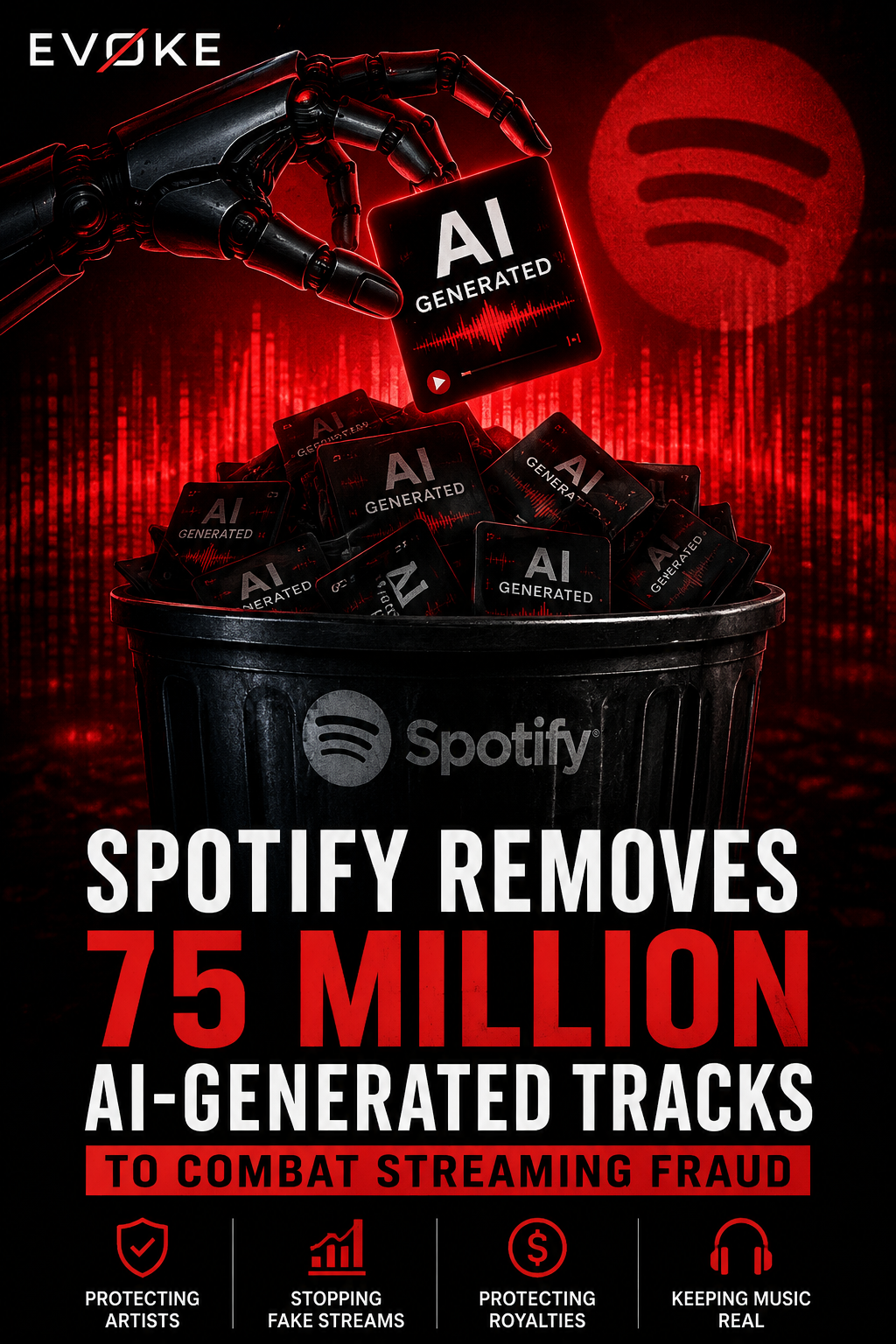
Spotify has removed around 75 million artificial intelligence generated tracks from its platform. This is part of their effort to stop streaming fraud and low quality spam uploads. Spotify has not said how many tracks were removed but it shows how big of a challenge streaming services are facing with all the artificial intelligence generated music.
This move shows that streaming services are getting serious about protecting artists, listeners and advertisers from content.
Years ago you needed a lot of equipment and people to make a song. Now anyone can make thousands of tracks using artificial intelligence software in just a few hours. Some people are using this technology in that way.
Instead of making music because they love it, they upload a lot of automatically generated songs just to get streaming royalties.
A lot of these tracks do not get listened to by people. They rely on streaming activity or fake playlist placement to make money.
This means there are millions of quality recordings competing with fake artists.
What is streaming fraud?
Streaming fraud happens when someone fake listens to a song to get royalties or make it popular.
Some common ways people do this are:
* Using automated bots to play songs over and over
* Making listener accounts
* Using click farms to generate streams
* Faking playlist placement
* Uploading thousands of identical artificial intelligence generated tracks
Every fake stream takes money away from real musicians.
One fake stream may not be worth a lot. Millions of them can add up to a lot of money.
It also messes up the recommendation algorithms. Makes it harder for independent artists to get discovered.
Spotify is not banning intelligence generated music. A lot of artists already use intelligence as part of their creative process.
For example they use it to:
* Make chord progressions
* Create drum patterns
* Design synth sounds
* Write ideas
* Mix and master songs
* Clean up vocals
The problem is when artificial intelligence is used to make thousands of almost identical songs just to exploit royalty systems instead of making music for people.
Why is Spotify taking action?
Spotify has been working on improving its systems to detect activity. Its anti-fraud efforts now include machine learning systems that can identify streaming behavior and suspicious upload patterns.
Removing millions of spam tracks helps Spotify:
* Protect royalty payments
* Improve music recommendations
* Reduce search clutter
* Keep listener trust
* Support artists
As artificial intelligence music generation gets better these detection systems will become even more important.
The number of intelligence generated songs being uploaded every day is getting bigger.
Some artificial intelligence music platforms now let users make songs in minutes. Some users make hundreds or even thousands of tracks every week.
While many creators use these tools in a way others try to upload as much as they can in hopes of getting some streams and making passive income.
This has become attractive because it is cheap and easy to upload a lot of music.
How does streaming fraud hurt artists?
Independent musicians are hurt the most. Spotifys royalty pool is shared with everyone. Fake streams make it harder for real artists to get paid fairly.
There are problems too.
Artists may not show up in search results if spam uploads dominate genres or keywords. Recommendation algorithms can also get messed up if they are influenced by listening data.
Real musicians lose visibility while fake uploaders try to make money from automated content.
Artificial intelligence still has a future in music.
Despite these challenges artificial intelligence is expected to remain a tool for creativity. Many producers already use intelligence to:
* Make song ideas
* Speed up production workflows
* Remove background noise
* Create virtual instruments
* Improve mixing efficiency
* Translate vocals into languages
Professional producers see artificial intelligence as another tool, not a replacement for human creativity.
What does this mean for music producers?
If you are using intelligence to help with music production you do not need to worry. Spotifys enforcement efforts are aimed at behavior, not real creators using new tools.
Artists should keep:
* Writing music
* Building audiences
* Avoiding streaming services
* Marketing through legitimate playlists
* Making consistent high quality releases
engagement is still the best way to succeed in the long term.
The future of streaming is uncertain.
Streaming platforms are facing one of the challenges in digital music history. Artificial intelligence has made it easier to make music. It has also made it easier to make a lot of low quality content.
Spotifys removal of intelligence generated tracks shows how big of a challenge this is. The message is clear: platforms are investing in detecting spam protecting royalty systems and making sure real artists have a chance to be discovered.
As artificial intelligence technology gets better the industry will need to find a balance between encouraging innovation and preventing abuse. For artists who make music and build real audiences this balance could make streaming platforms better, for everyone.
